Home › What We Treat › Trauma Therapy
Trauma Therapy for Adults in New York
You Handled It. It’s Still Making Decisions
Most people who come to us for trauma work are functioning. They got through it, they built a life after it, and somewhere in that life there are rooms they don’t go into. You don’t have to fall apart to deserve help with this, and you don’t have to tell the whole story to start.
As Seen On




It Isn’t Always Flashbacks
Sometimes it’s a reaction that doesn’t match what’s in front of you. It tends to show up in the body before it shows up in words.
- It shows up as a reaction three sizes too big for the thing that caused it. You knew that while it was happening, and knowing didn’t help.
- It shows up in the route you take that adds twenty minutes, or the topic you steer around so smoothly that no one notices you’re steering.
- It shows up as either completely on or completely gone, with not much available in between, and people who love you saying you’re not really there.
And then there are the things people say, meaning well. “That was years ago.” “At least you’re okay now.” “You seem so together about it.”
And then there’s the question underneath: “How much of who I am is just what happened to me?”

Get Started With Trauma Therapy In 3 Simple Steps
01
Reach Out
Ask for your free 15-minute call below. You won’t be asked to tell the story on that call, or on the first several after it.
02
Start Trauma Therapy
Steadiness first. The early sessions build what you need to stay grounded, because going at the hard part without that is how people end up worse. Processing starts when you and your clinician agree you’re ready.
03
Get The Rooms Back
Stop routing your life around it. The memory doesn’t get deleted. It stops setting the terms.
What Trauma Therapy Gives You
- Control over the pacebecause you decide what gets said and when, and a clinician who moves faster than you agreed to is doing it wrong
- A way to catch it earliersince the physical response usually arrives before any thought does and can be worked with once you can spot it
- A route that doesn’t require retellingif talking through it repeatedly is the part you can’t face. EMDR is one option we offer
- Your range backso there’s something available between fully on and completely gone
- More than one mind on itwhich matters most in trauma work, where you set the pace and your therapist can consult the team on a hard case

Meet Your Trauma Therapists

Alayna Nowlin, MA
Associate Mental Health Counselor
“Where we had thought to travel outward, we will come to the center of our own existence. And where we had thought to be alone, we will be with all the world.”
Joseph Campbell
Training and education
MA in Counseling Psychology, Pacifica Graduate Institute · MA in Counseling for Mental Health and Wellness, in progress at NYU
Draws from
Internal Family Systems (IFS), Emotionally Focused Therapy (EFT) and attachment-based work
Works with
Women’s issues, LGBTQIA+, trauma and couples
Availability
Monday to Friday, 9am to 7pm
Pricing
Session fees vary between $100 and $185 depending on the clinician. Reach out to learn more about our rates
Alayna is completing her graduate training and practices under the supervision of Christin Gianola, MA, EdM, LMHC (christin@sagemindsny.com), who reviews her clinical work.
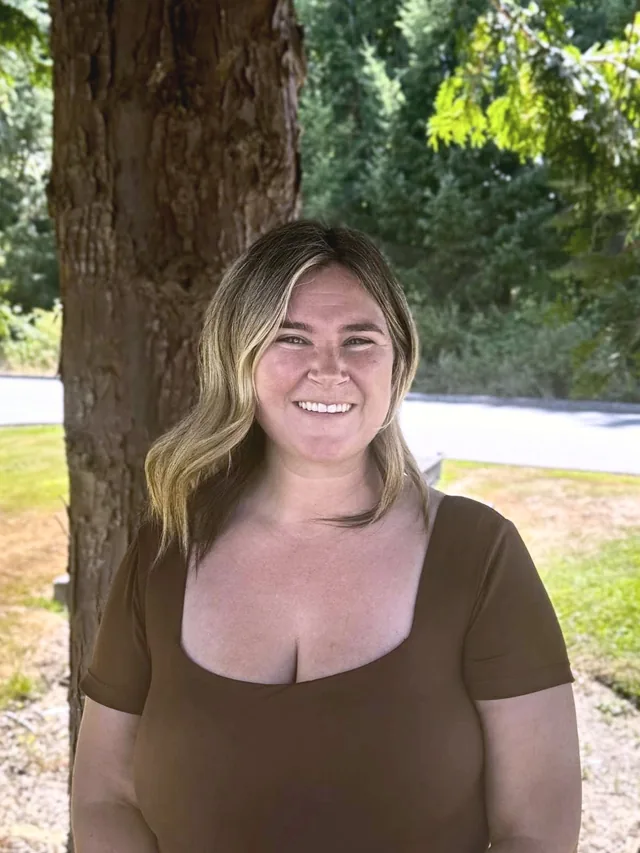
Chloe Theuret, MA
Mental Health Counselor, Permit Holder
“There’s nothing broken to be fixed. You are helping yourself. Healing the parts of you that hurt too much, and perhaps hurt others, too.”
Sarah J. Maas
Training and education
Limited permit in mental health counseling, New York State · University of Kentucky, 2025
Draws from
Emotion-focused therapy, DBT, CBT and mindfulness
Works with
Couples and families, postpartum and trauma. Runs our Monday evening women’s group
Availability
Every day, daytime and evenings
Pricing
Session fees vary between $100 and $185 depending on the clinician. Reach out to learn more about our rates
Chloe practices under the supervision of Ashley Raia, MS, LMHC (ashley@sagemindsny.com), who reviews her clinical work.
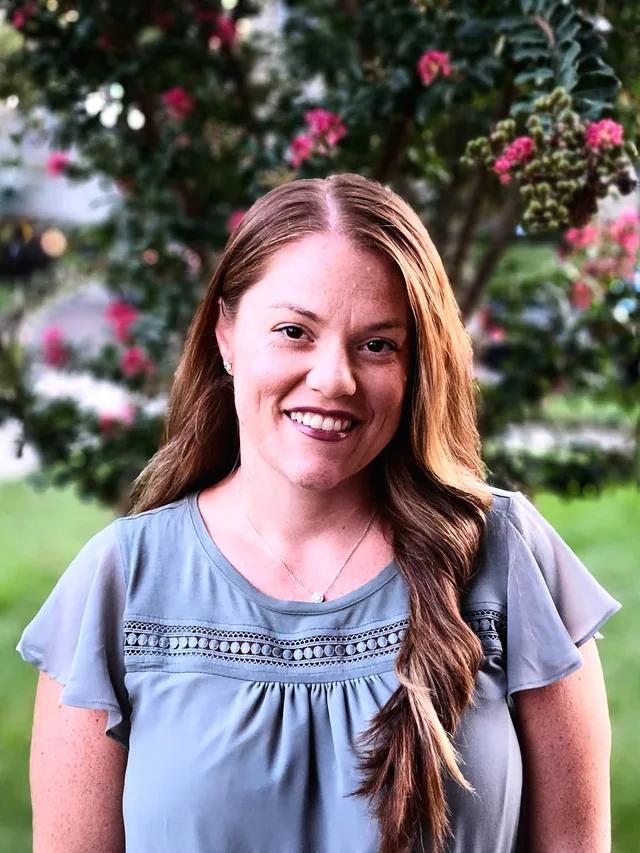
Ashley Raia, MS, LMHC
Licensed Mental Health Counselor · Co-founder
“It is important for people to know that no matter what lies in their past, they can overcome the dark side and press on to a brighter world.”
Dave Pelzer
Training and education
Licensed Mental Health Counselor, New York State · Queens College, 2016
Trained in
EMDR · DBT
Works with
Adults on trauma, IVF and fertility, perinatal and postpartum mental health, and anxiety
Availability
Waitlist open for EMDR, including for clients already seeing another Sage Minds clinician
Pricing
Session fees vary between $100 and $185 depending on the clinician. Reach out to learn more about our rates
On Working with a Supervised Clinician
Every case a supervised clinician carries is reviewed by their licensed supervisor each week.
What You Can Check For Yourself
Licensed in New York
Ashley Raia, MS, LMHC, License #009509 · Christin Gianola, MA, EdM, LMHC, License #009788 · Verify either with the New York State Office of the Professions online verification search
Supervision, named
Our permit holders and associate counselors practice under a named licensed supervisor, and you get that supervisor’s contact details before you start.
In network with 14 plans
Aetna · Anthem · BCBS · Cigna · Optum · Oscar · Oxford · UMR · United Healthcare · Northwell Direct · NYC Employees PPO Plan · MVP · Highmark · Quest Behavioral Health. We credential as a practice, so every clinician here is in network with every plan on this list.
Listed on
Psychology Today · Headway · ThrivingCampus · WellTrackConnect
Fees
Session fees vary between $100 and $185 depending on the clinician. Reach out to learn more about our rates.
We answer within 24 hours
A founder reads every inquiry and gets back to you.
What Trauma Therapy Costs
Sessions are $100 to $185 when you pay out of pocket, depending on which clinician you see. EMDR is billed under standard psychotherapy codes, so choosing it doesn’t change the price.






- Oxford







We’re in network with 14 plans: Aetna, Anthem, BCBS, Cigna, Optum, Oscar, Oxford, UMR, United Healthcare, Northwell Direct, NYC Employees PPO Plan, MVP, Highmark and Quest Behavioral Health. Most insured clients pay a copay rather than the full fee. We verify your specific benefits before your first session and tell you the number before you owe it.
We also work with NYSHIP and GHI, and we bill them for you. If we’re not paneled with your plan, you pay the session fee and we give you a superbill. That’s an itemized receipt you send to your insurer to claim partial reimbursement under your out-of-network benefits. How much comes back depends on your plan, and benefits are an agreement between you and your insurance company, so we can’t guarantee coverage or reimbursement.
We also take FSA and HSA funds. Mention it and we’ll get that set up before your first full session.

Ask For A Free Trauma Therapy Consultation
Fifteen minutes on the phone, no pressure. You won’t be asked what happened. Mostly we want to understand what’s affecting you now and whether we’re the right fit for it.

Our New Client Inquiry asks about your availability, what brings you to therapy and your insurance, so we can match you with the right clinician for a free 15-minute call.
Get My Free ConsultationOpens our New Client Inquiry form in a new tab.
Trauma Therapy FAQs
Do I have to talk about what happened?
Not in detail, and not before you’re ready. Your clinician needs enough to understand what you’re working with, not the full account. EMDR in particular doesn’t require retelling the whole story, and some people choose it for that reason.
Does it count as trauma if nothing dramatic happened?
Yes. Trauma is about what an experience did to you, not how it would rank against someone else’s. Ongoing situations, things that happened repeatedly, and things that felt unsurvivable at the time all count.
How long does trauma therapy take?
Longer than people hope, usually. A single recent event can settle in a few months. Repeated or long-standing experiences take considerably longer, and the preparation phase alone can run several sessions. Your clinician will give you a realistic picture rather than a promise.
What is a trauma-informed therapist?
A clinician trained to recognize how trauma affects the way a person responds, and to work in a way that doesn’t repeat the dynamics that caused the harm. In practice that means pacing, choice, and not pushing you somewhere you haven’t agreed to go.
Can I do this if it happened in childhood?
Yes. Most of the adults we see for childhood trauma are processing it decades later. That isn’t late. To be clear, this is adults working on childhood experience. We don’t see young children at this time.
What if I get worse before I get better?
That’s a real risk with trauma work done too fast, and it’s exactly why the first phase is about stability. Tell your clinician if something is landing harder than expected. Adjusting the pace is a normal part of the work, not a setback.
Is trauma therapy the same as PTSD treatment?
There’s a lot of overlap. PTSD is a specific diagnosis with specific criteria. Plenty of people carry the effects of trauma without meeting them, and the work is broadly the same either way.
Where are you located, and do you offer online therapy?
Every session is online. We’re a fully virtual practice and our clinicians are licensed in New York State, or practicing under the supervision of a New York licensed clinician, so we can see you anywhere in New York as long as you’re physically in the state at the time of your session. You’ll need a device, a connection and somewhere private. Plenty of people use a parked car.
Do you accept insurance?
We’re in network with 14 plans, including Aetna, Cigna, Optum, Oxford, United Healthcare, UMR, Anthem and BCBS. We also work with NYSHIP and GHI, and we bill them for you. We verify your specific coverage before your first session.
What is your out-of-pocket cost?
We offer private-pay therapy options to meet a range of needs. Session fees vary between $100 and $185 depending on the clinician you work with. We encourage you to reach out to learn more about our rates and find a clinician who is the right fit for you. Couples and family sessions cost the same as individual ones.
How do I get started?
Fill out the form above or call 516-855-8255. A founder reads it and gets back to you within 24 hours, and the clinician we match you to reaches out for your free 15-minute call. If we’re a fit, you can usually have your first session within two to three days, once your intake paperwork is in. If we’re not, we’ll tell you and point you somewhere better.
Nothing Gets Told Before You’re Ready
Start with fifteen minutes. An answer within 24 hours.
Monday to Friday 7am to 9pm · Saturday 10am to 2pm · Sunday 9am to 9pm